CNA Meeting Minutes – February 14, 2022, via Zoom, 6:30-8:30 p.m.
Present:
Council of Neighborhood Associations Officers: Larry Dzieza (Nottingham) – Chair, Melissa Allen, Vice Chair, Mark Toy and Ryan Hollander (SWONA) Co-Secretary.
Members: Bruce Coulter (NWONA), Bob Jacobs (Gov. Stevens NA), Dana McAvoy (East Bay), Darrah (Wildwood), Karen Sweeney (Northeast), Judy Bardin (NWONA), Marty Worcester (Redwood Estates NA), Jenn Wulf (DNA), John Newman (Burbank)
City Representatives & Presenters: Tim Smith, Amy Buckler, Ron Jones
6:30 – 6:35 Report by Tim Smith
City has $23,000 for neighborhood grants this year. Lydia has posted the information on how to apply for the grants. The RNA update process is also underway due March 21st. LUEC will be meeting this week and discussing sidewalks and receiving a briefing.
Met with Bigelow Highlands neighborhood to discuss issues and is scheduled to meet with the East Bay Drive neighborhood in March at the invitation of Dana McAvoy.
Tim welcomed meeting with any other neighborhoods when requested.
6:35 – 6:45 Neighborhood Reports
Bob Jacobs (Gov. Stevens) –No news to report.
Melissa (Bigelow Heights) – Issue about a burned out house on Puget that has been there for 2.5 years. The Olympia Northeast Neighborhood Alliance ONNA. Reported on lack of effective code enforcement by city.
Bob Jacobs questioned whether the City Attorney provided solutions to the code enforcement problems. Melissa believes that they are reluctant to move against litigious property owners.
Bigelow will apply for grant funding for neighborhood event signs.
Karen Sweeney (Northeast) brought up the topic of the sidewalk in-lieu program that allows property owners to pay into the city an amount for each linear foot of sidewalk not built if the sidewalk is determined to be a “gap” sidewalk which is a sidewalk that does not connect to any adjacent sidewalks.
Judy Bardin (NWONA) reported on the noise ordinance in Palm Springs where noise is not allowed to extend over the fence line. A $500 fine. Thinks it’s a good idea for the City of Olympia. Judy said especially if you live near an AirBnb.
Darrah (Wildwood) reported about their calendar planning efforts for the year. Working on a block party and discussed their newsletter format.
Dana McAvoy reported on their Board Meeting and sent out their annual newsletter by mail to all of the 250 houses in their neighborhood. Established dates for picnic and future members meetings. Elected new Board officers.
Ryan Hollander (SWONA) continued quarterly meetings and that attendance has gone up. Had Olympia staff give overview of crime trends and safety tips for the neighborhood. Also had a Master Gardeners to provide gardening tips. Dan Leahy has engaged the neighborhood over the capital mall triangle and said about 120 people let the city know that they want to be part of the conversation about it. Great response from city regarding urban stairwell that they helped clean up and rebuild, alley fixing and a new mural designed and painted.
Still don’t know when they will be able to restart real life events. Some Board member turnover and added energy.
Mark Toy reminded the CNA that tonight would be his last meeting. He has a SWONA board meeting tomorrow. Planning the March annual meeting.
Marty Worcester (Redwood Estates NA) Annual meeting will be on February 17th. Started a newsletter. Element neighborhood was interested in becoming more involved and join in with their neighborhood.
Jenn Wulf (DNA) The Board met a couple of times but most clerical items.
John Newman (Burbank) talked about the city looking at a sidewalk project on Burbank and Elliot for a long time. The city is looking for grant money for it. Someone built a house in the neighborhood but that the builder said it was cheaper to build a sidewalk to nowhere than pay the in-lieu fees. He would like to hear more about who pays and where.
Larry Dzieza (Nottingham) had annual board meeting and voted on budget and officers. He made a presentation on an initiative to make the neighborhood more neighborly. One of those was to create a bench area in his front yard for folks to sit, especially because it is an area where the school bus comes and there is no place to wait except in the middle of the street.
Bruce (NWONA) – NW neighborhood starting to come out of Cave. NWONA Meeting next Monday night. Capital Mall Triangle Development meeting planned with SWONA members.
Charlotte Persons (BNA) – CACC – plan for new airport. Six possible locations for airport expansion – Paine field is top of list. Olympia rated high for expansion. Jay Elder passed, Larry mentions Jay former president of CNA, science teacher. Judy (NWONA) – Meal train being organized for Jay Elder’s family after his passing.
Darrah (Wildwood) – Next quarterly meeting Jan. 20th. “Winter Walkabout” activity since last meeting (caroling outside of Vic’s).
Mark Toy (SWONA)– Since last meeting finished final NMG report to City, held December quarterly meeting – speakers on Crisis Response unit, Capital Mall Triangle Development, Public Safety, Homeless Encampment evacuation. This is my last turn taking minutes. Larry asked about current Covid surge, Mark suggested people minimize social interactions for the next 2-3 weeks.
Dana (East Bay Drive) – Not too much happening. Updating communication e-mail distribution list.
Jenn (DNA) – DNA took time off during holidays. Leg session is starting – watching for Tenants Advocacy work. Hard to do outreach to new apartments – cannot knock on door on new developments – need to know someone in building to get in. (Larry – referencing City MOU – strategies to reach renters – send out to new tenants notice of rights, NA).
Charlotte Persons (BNA) – Recent WIP article on the December 15 downtown fire impacts to local businesses. Jenn – two neighborhood associations in downtown – one for businesses, one for residents – GoFundMe fund to businesses.
John Newman (Burbank) – Burbank Avenue ditch by GRUB to Schneider Creek flooded during last storm.
Karen (Eastside NA) – No comments, just guest.
Larry (Nottingham NA) – NA meeting Feb. 20, electing new board. $220 assessment/year for fence maintenance and landscaping. Trying to solicit interest in bus shelter.
Tim (City) – Lydia asked to mention that 2022 NMG workshop will be coming second week of February via Zoom.
6:55 – 7:00 Senior Planner Ron Jones of the City’s Public Works Department – Waste ReSources Master Plan, Services and Rates
Discussed update of the 2015 plan. 6-year utility master plan. Plan will go to the Utility advisory committee in April. It is a policy and strategic direction document. It includes a cost of service study that deals with customer rates. Recycling and composting work was discussed.
The original planning did not include much outreach effort. Public outreach this time will allow input and review and comment. He offered to speak to associations for any questions or presentations and gave his number as 360.753.8509. rjones@ci.olympia.wa.us
Bob Jacobs urged him to make the draft available early to allow meaningful engagement by the neighborhoods.
There was then a discussion about what recycling material will be allowed and why changes were necessary in the past. Mr. Jones said that there is no plan for making changes.
Melissa Allen expressed concern about increasing costs for services and whether they ever do rate reductions. Mr. Jones said that the fees cover the costs for the services. He did say that there was once a rate reduction when the city moved to a more efficient process.
Jenn Wulf asked whether the workers were unionized. Mr. Jones replied that they are all part of AFSCME.
7:15 – 8:15 Amy Buckler – Implementing the Comprehensive Plan community vision
Key projects for this year:
- Capital Mall Triangle Subarea (TODI Grant):
- Actions to Increase Housing Supply and Affordability (HAPI Grant):
- Reducing Parking Minimums in Transit Areas
- Streamlining the Permit Process
- Boulevard Road Development Project
- Neighborhood Centers
- Parking Code Update
- Permitting Process Update
Amy Buckler explained the process and background on the above items.

Questions & Answers
Marty Worcester raised concerns about seniors in trouble because of raised rents when they move into low-income housing. Agreements with utility companies with the landlord results in higher charges to the residents as high as $200 a month. Amy Buckler said she might follow-up with her on this issue to understand it better.
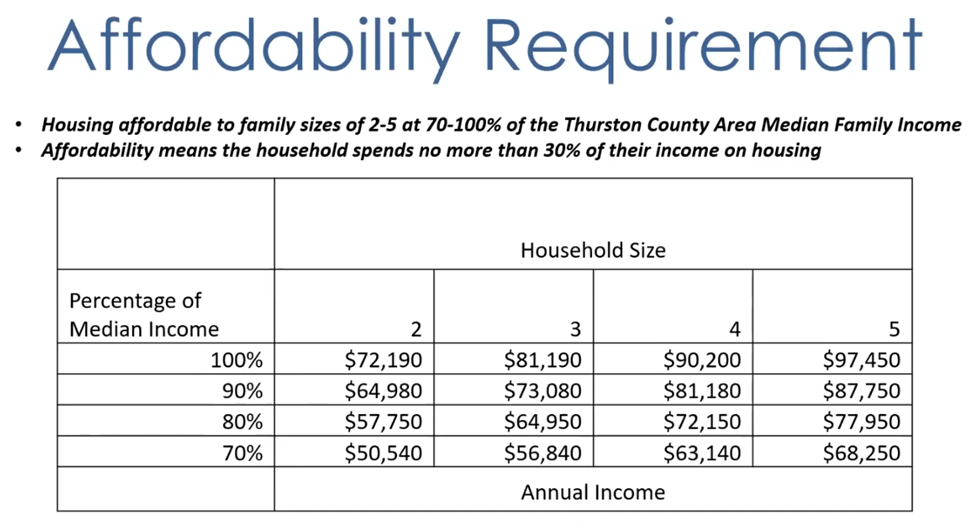
Judy Bardin raised the issue of the income limits the city is using to define low-income at 80% of Area Median Income when 40% – 50% of Olympians are making less than $50,000 which is lower than what the city is calling low-income. Legislation being proposed in the state is using 60% of AMI. Judy wondered why the city is sticking with 80% when it won’t reach a lot of people who live here.
Amy replied that is because that is how HUD defines it. She pointed out that some program at the federal level do use lower levels and that the City’s Home Fund uses 60% or below AMI. She said that different programs have different thresholds. She confirmed Judy’s point that this might be a good policy conversation for the Council to have at some point on how to define low-income but staff is not going to go out on a limb and create their own housing affordability definition and will stick to what most programs use which is HUDs definition.
Judy also said that given the high Triangle densities there should be lower AMIs.
Bob Jacobs asked why the city uses County AMI when the city’s incomes are significantly lower? Amy replied that what most housing programs tie to. Larry Dzieza, pointed out that there is nothing stopping the city from changing it to meet Olympia’s needs. Amy reiterated that it is a valid policy conversation that the city council could have but as a staff person she is not going to outside of the municipal code or make her own definition right now.
Melissa Allen asked if there is a mechanism for the CNA to provide more input and more engagement than rather just being the recipient of information? Amy said there will be public engagement role in the proposed projects.
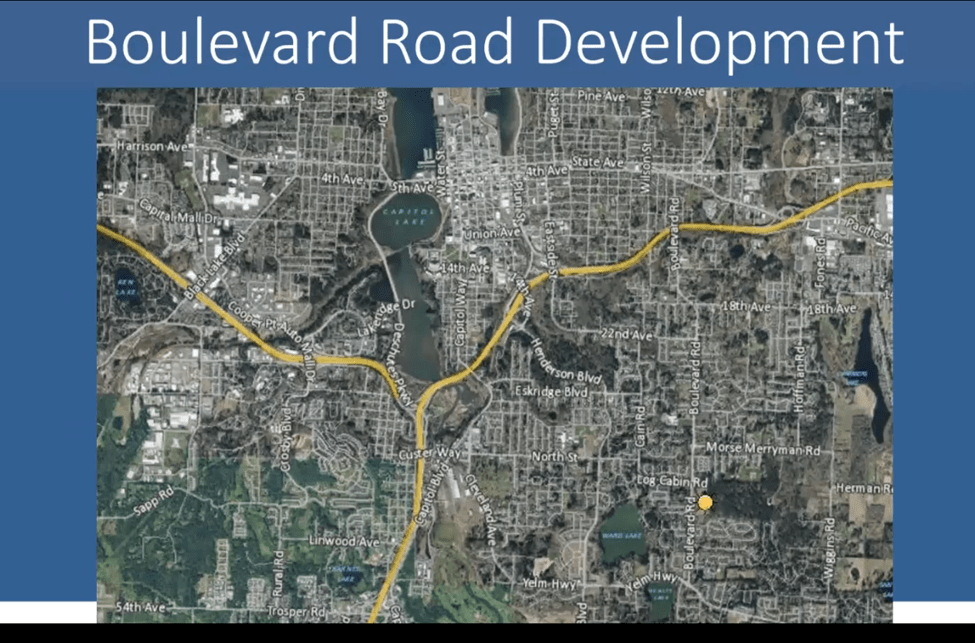

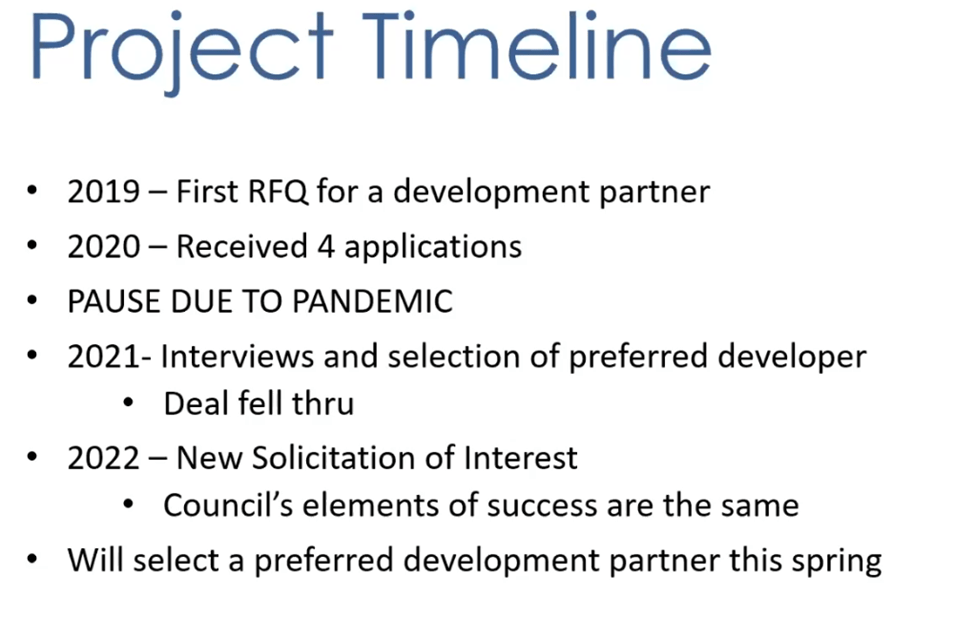
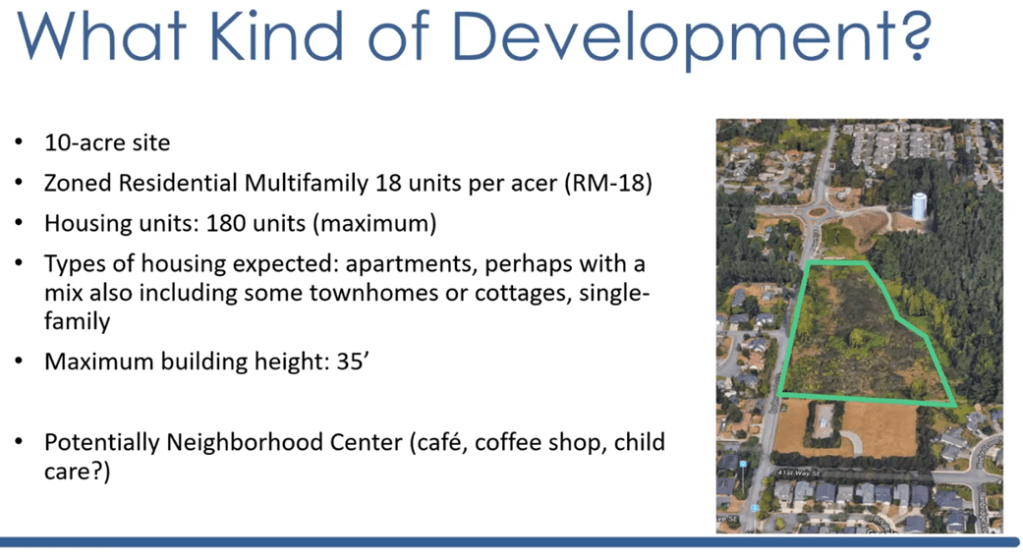
Amy showed the AMI slide that shows the city’s interest in providing housing for the Boulevard property between 70% and 100% of AMI. Targeting for very low or extremely low income was not the goal, the middle income market was.
The city will sell the property to the selected developer and create conditions to the sale including a requirement for public engagement. Amy discussed the feasible range of accommodating neighborhood input. For example, input regarding concerns about the project’s plan for access and trails that might be reworked to address neighborhood concerns. Some things like calling for the kinds of building materials like roof types would be out of bounds. Storm water will be addressed at the city level.
Questions and Answers
Larry Dzieza expressed his disappointment in the neighborhood engagement history of the project. When the project first began in 2019 he asked about the role of RNA’s and was told there would be none but not to worry, the city will appoint people from various city committees and boards who live in neighborhoods nearby. He also said it was a flaw to have the engagement with neighborhoods conducted through and by the developer instead of the city. When asked why that is a problem, he replied because by that time most of the key decisions have been made and that our Comprehensive Plan says that neighborhoods should be involved at the earliest possible point in development planning.
Amy replied that not all the decisions will be made at the time of sale of the property as there are land use decisions that still need to be made. Further, the developer needs to be at the table.
Bob Jacobs asked about her presentation that says the city will start focusing on permanently affordable housing and does that apply to this Boulevard development? Will the chart she showed be permanently income limited? Amy replied that when the city says permanently, “we mean permanently for a period of time”. No, Amy said, it will not be required to be permanently affordable. She said that what will happen is there will be an agreement for affordable for a certain number of years, like 20 years, similar to the Griswold’s agreement. Bob expressed his appreciation if the city officials would accurately use the English language such that the word “ permanent” means “permanent” and not time limited. Bob pointed out that cities experience big losses in affordable housing when these time limits are reached and the housing becomes market rate.
Melissa Allen asked about what concessions the city will make to make it happen? Amy said the multi-family tax exemption is not eligible at this location. Amy said the city could make concessions on the cost of the land but not the permitting process. The concessions may be needed she said to get the affordability as low as possible.
Ryan Hollander asked if the city has thought about hiring a contractor to build it and leave it in the ownership of the city? Amy said not at this stage as the city is not geared or resourced to do that but the city is working with a consultant to identify best practices and funding sources for helping to support permanently affordable housing and by permanent she means like for 99 years. She knows the public is really interested in things like co-ops or land trusts or Habitat for Humanity type projects but the city hasn’t done much with that before. It’s an element of the housing program that the council is really interested in building upon, but we are just not there yet.
Larry Dzieza then said that maybe the city is acting out of sequence and could miss a great opportunity by picking a developer before having the study done that would help meet what the public and the council say they would like to see happen. He said that truly affordable housing for 99 years will add a lot more value than kind-of-affordable housing for 15 or 20 years. Larry said that is more bang for our bucks and it would pay to wait.
Ryan Hollander asked about what she meant by the city not being well-resourced? Is it in terms of funding or knowledge or both? Amy said they have no arm in their administration to manage housing. She said, the city doesn’t really want to be in that business at this point in time because we don’t have the knowledge or staffing for that. Tim Smith added that the city doesn’t have a funding source for building it. Ryan replied that the tenant’s rents would be the funding source and you could contract out the construction and management.
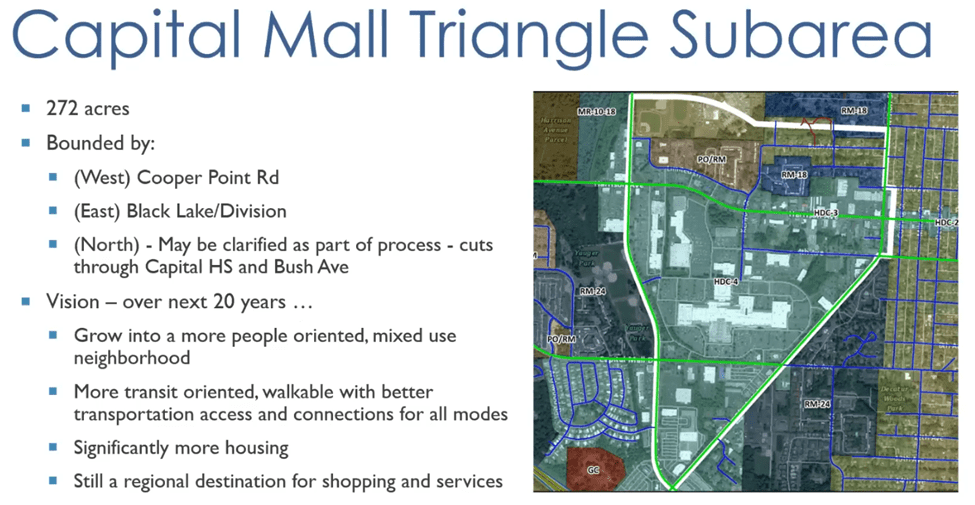
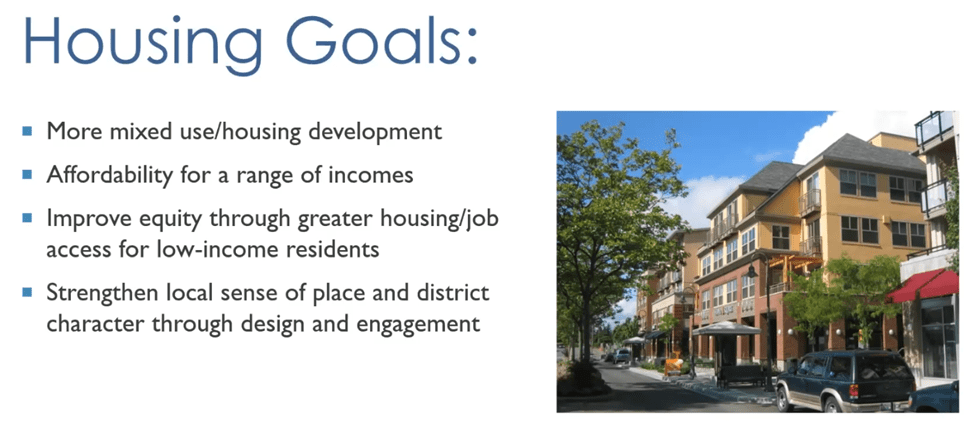

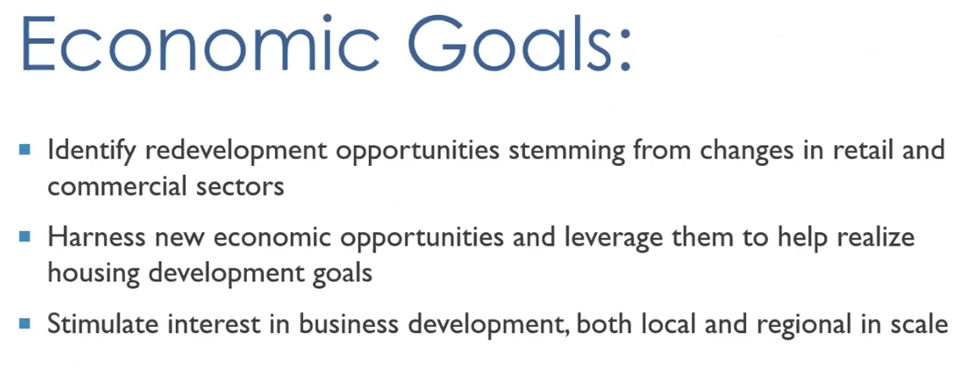
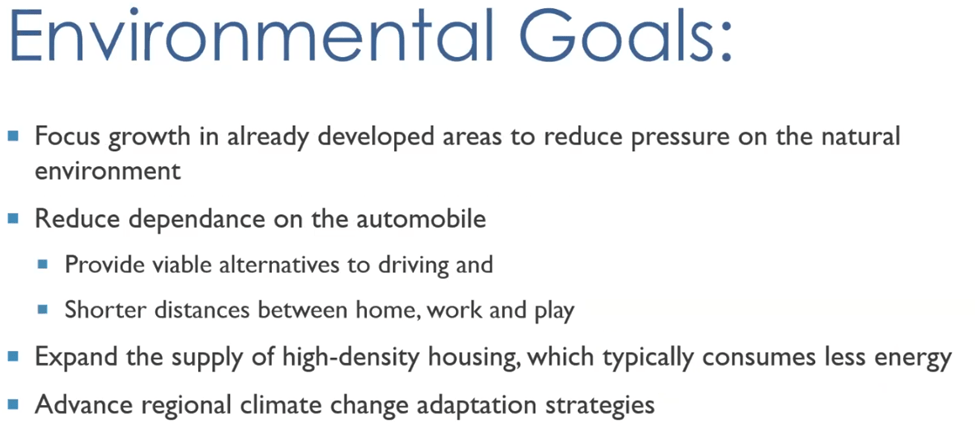
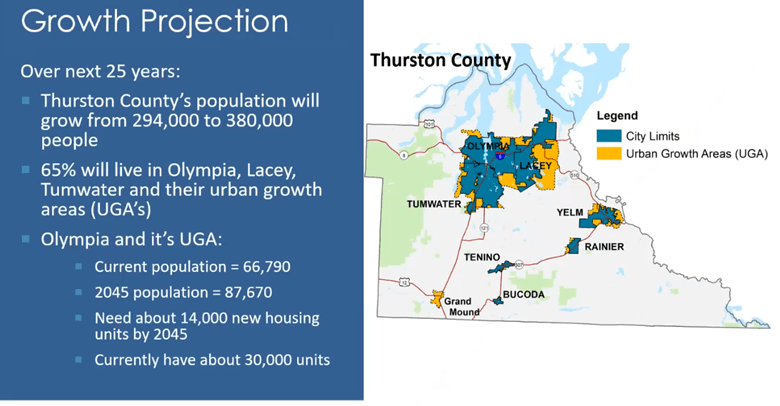
Amy presented the need for a subarea plan for the Capital Mall Triangle, a project area which is called for in the housing action plan. The city of received a $250,000 grant from the Department of Commerce for this work. The focus of the grant is to encourage transit-oriented development which means compact mixed use communities and new transit where people can enjoy easy access to jobs and services.
The deliverables are a summary of the plan and an environmental impact statement. There will be an analysis of the cumulative impact of that development and mitigation measures that could then be put into the City’s development code to mitigate those cumulative impacts. There’s also a very large public engagement piece to this project.
Amy said the area is a triangle of 272 acres, bounded on the West by Cooper point Rd the east by Black Lake and Division and in the north a boundary that will probably need to be clarified.
The vision for this triangle in the comprehensive plan is that, over the next 20 years, it will grow into a more people oriented mixed use: commercial and residential. More transit oriented and walkable with better transportation access and connections with significantly more housing but also still remaining a regional destination for shopping and services. The current land use pattern reflects the 1970s development era: a traditional highway oriented big box retail and a suburban mall surrounded by vast parking lots.
Amy said the plan needs to bring together property owners, the businesses and the residents in the city to help create a more specific vision and then a strategy for how are we are going to get there.
The city has given a heads up to make property owners like the mall and shopping center owners to make them aware about this process and they’re interested. They know that things are changing for them and they’re telling us that they are already talking about adding housing to the area.
Amy said, transportation planners here at the city say the most important thing we do on the West side is a better transportation grid for access for all modes and more connectivity for all modes. That will make it easier for people to use the transit to walk and bike throughout the area that is going to be really important to helping achieve this vision.
If CNA members are interested they can become an “interested party” and be informed about the project by contacting abuckler@ci.olympia.wa.us.
Questions and Answers
Melissa asked where the money comes from for the consultants? Amy said it was all funded by the Commerce grant. Larry pointed out that the city is committing staff and resources to the effort so its not without city cost.
Ryan Hollander asked what can the city do to encourage the private landowners to convert their parking lots into housing? Amy says the zoning is not needed to change. Parking requirements are one of the things the city is looking at which can free up more space for housing. Amy says the market will determine a lot and a lot of malls are beginning to add housing already. They city can make the transportation investments that would help make it a reality. This will take decades to achieve.
Bob Jacobs said that the plan presented says it will provide housing for a wide range of incomes. How do you keep it that way? Amy recognized the issue as important and that the multi-year tax exemption is just 12 years but the state may allow extensions up to 50 years. Darien Lightfoot from the city may be able to talk about this.
Larry Dzieza asked what role the West Olympia Business Association (WOBA) and Westside Community Visioning Group has had? Amy said they have been lobbying the city for a number of years in support of it. The City wants to engage the owners and businesses and make a stronger relationship with the city.
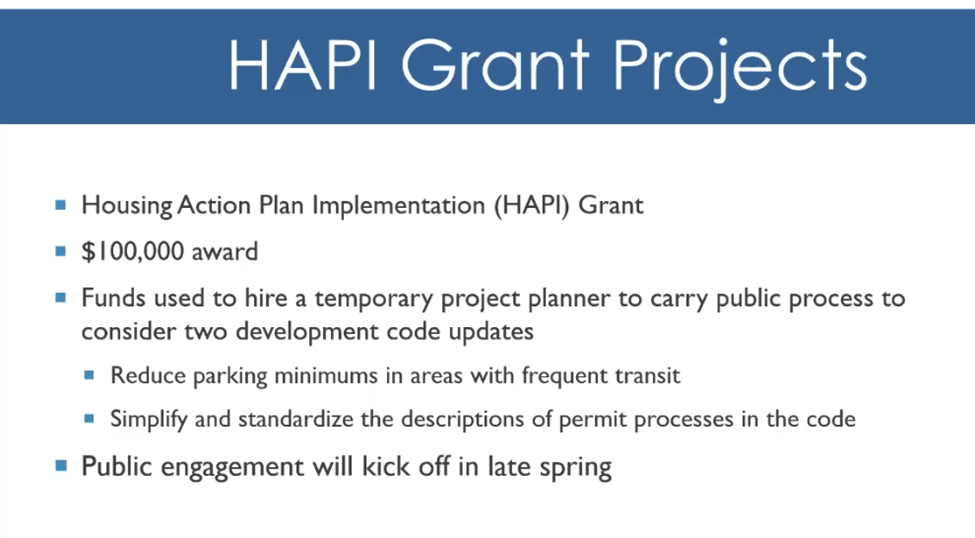

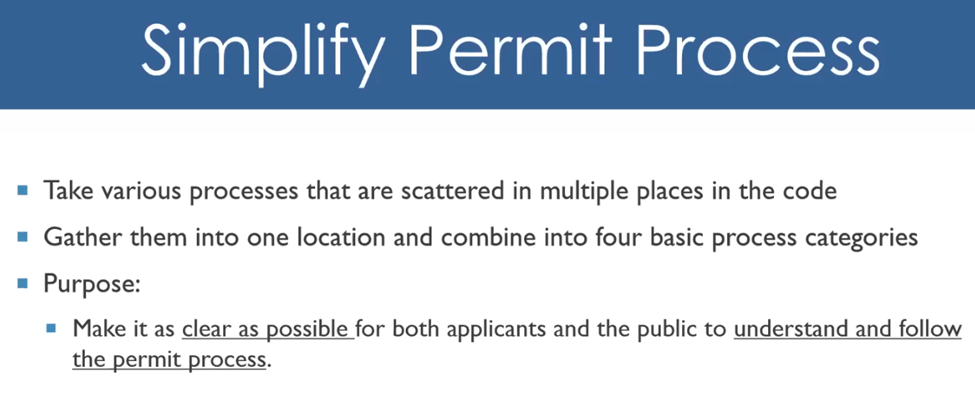
Amy reported that the city received another $100,000 grant for housing action plan implementation (HAPI). We are using those funds to hire a temporary project planner to carry out two processes. One is development code updates about reducing parking minimums with areas with frequent transit and the other to simplify and standardize the descriptions of our permit processes in the code.
Public engagement will kick off later on this spring.
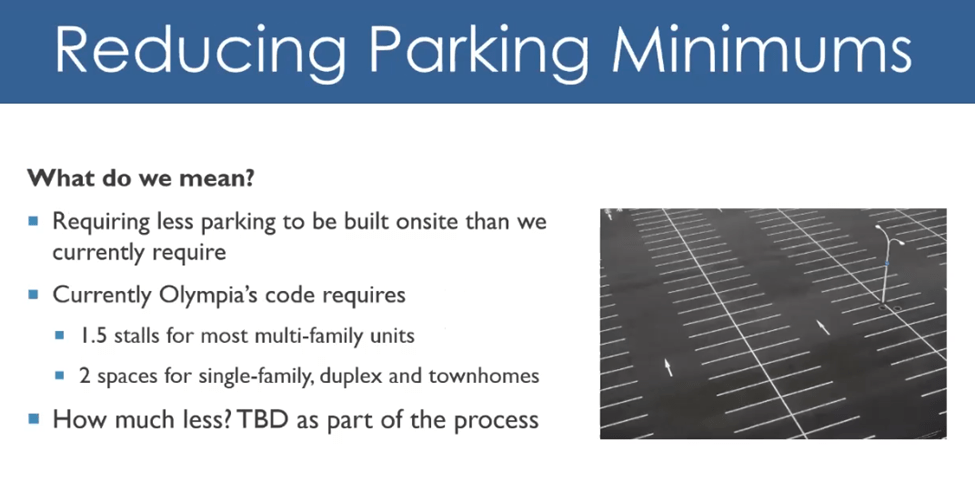
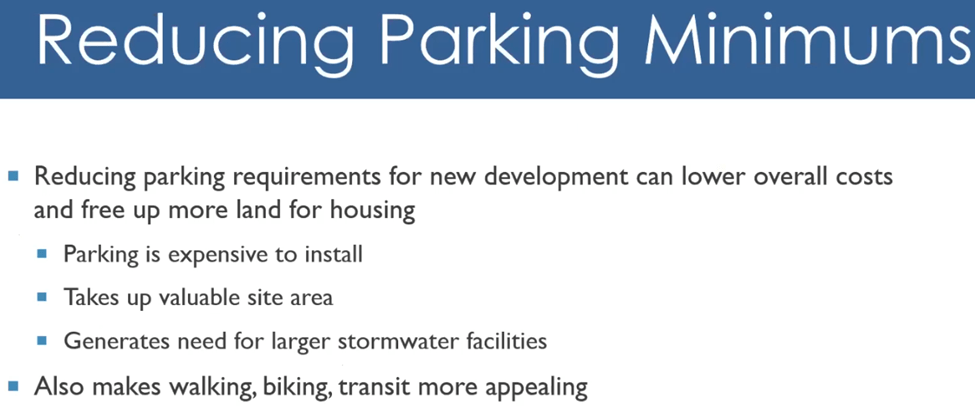
We could be requiring less parking to be built on site than we currently require. Currently Olympia development code requires 1 1/2 stalls for most multifamily units and two spaces for things like single family, duplex and townhomes. Reducing parking requirements has been shown to help incentivize more housing development and reduce housing costs. How low we go we don’t know, that’s part of the study.
What does frequent transit routes mean? Frequent transit typically means the bus comes every 15 minutes where we see those areas is it our urban corridors and other types of street classifications like neighborhood collectors. Another consideration that will be made during that process is how far away from the transit stops are. The process is to figure that out where exactly we are talking about. We are not talking about reducing parking minimums neighborhoods for most part on your local access streets.
Questions and Answers
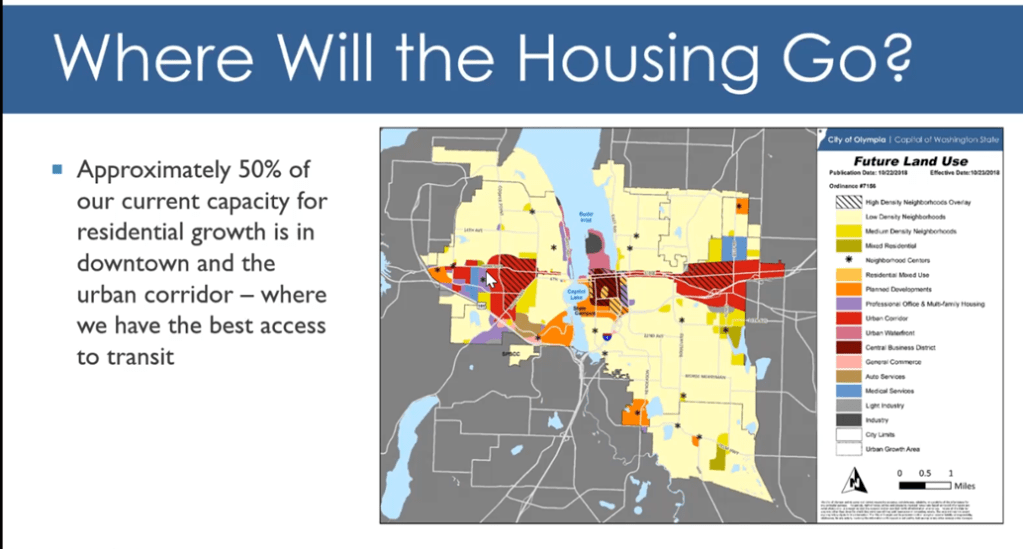
Judy Bardin asked about parking and increased density. Decreasing parking includes Capitol Neighborhood and Westside. If you are calling for half mile around transit city wide that is a lot. Is this going to be a citywide policy or just the triangle area? Amy replied it includes the three high density areas on the map and along the urban corridors. Judy said that would involve a lot of neighborhoods. Southeast Oly, Capitol, NE area and parts of the Westside. Amy replied that the study needs to bring that out.
Larry asked if neighborhoods would be engaged early on in this process or just developers and parking owners be involved? Amy says it calls for “robust” public engagement.
Melissa asked if the city’s resources for busses is working? Are more people walking and using the transit? She said she would be more supportive if she knew whether this is working. Amy said she doesn’t have the data with her but that ridership is up before COVID. This will take time she said.
Dana McAvoy said that when he lived in Seattle the city allowed for a zero parking requirement for developers and what happened was people still have cars that moved into those new places and because they had no parking they parked in the neighborhoods, filling up the neighborhoods with their cars. He said he had a house that was more than 1/4 mile from the closest transit. It effects neighborhoods outside of where you’re going to be building these multi-family units quite a distance away because people are still going to have cars and they’re going to park and find places in the neighborhoods around them. He shared that he lived through it seen it and just want to warn people that this is what will happen.
Bob Jacobs said that when you reduce the cost for developers it doesn’t reduce the price of housing, it just makes the developer more profit. Tim Smith said that it results in higher density housing. In downtown, Tim said that they require no parking for Downtown developments but that developers put parking in anyway because the market dictates it.
Larry Dzieza, restated the issue that when parking is not required it will create pressure on streets and homeowners will feel they lost something as a result. And while this will happen slowly over 20 years, it will result in a situation as described by Dana in Seattle. He also was concerned that the quarter mile becomes a half-mile and places of already high density like the Capitol neighborhood would feel it more quickly.
Larry Dzieza summarized the positive opportunity the Triangle efforts but asked the city to not ignore the community and neighborhoods and not give disproportionate attention to the large developers and landowners.
8:15 – 8:30 Minutes Approval and Agenda Ideas
Minutes approved.
8:30 Adjourn
Meeting adjourned.
 Council of Neighborhood Associations